



TGA vs Cysteamine Lash Lift Cream
TGA vs Cysteamine Lash Lift Cream
Two Ways to Lift the Same Lash
Every lash lift begins with a lifting cream that relaxes the lash so it can be reshaped, and there are two chemistries used to do it: thioglycolate, usually shortened to TGA, and cysteamine. Both reach the same end — they break the bonds inside the lash so it takes a new curl — but they get there differently, and the choice changes how the treatment behaves, who it suits and how the lashes feel afterwards. This is the first step of the three-step lift system, and it is the step where the two routes diverge.
The Shared Science
Both creams work by raising the pH of the lash above its natural level. That alkalinity makes the cuticle — the lash's outer layer of overlapping scales — swell and open, which lets the reducing agent reach the cortex inside, where the lash's shape is held. There it breaks the disulphide bonds that lock the keratin into its natural set, leaving the lash soft enough to reshape over the shield. The neutraliser then reforms those bonds in the new position.
The difference is in the reducing agent. Cysteamine hydrochloride is a decarboxylated derivative of cysteine — an amino acid that makes up roughly 10 to 14 per cent of the keratin in hair — so it is biochemically related to the lash's own structure and has a more biocompatible profile. That is why it works more gently than thioglycolate, even though both are doing the same fundamental job.
TGA and Cysteamine, Side by Side
| Property | TGA (Thioglycolate) | Cysteamine |
|---|---|---|
| Strength | Strong, fast-acting; rapidly breaks disulphide bonds | Gentle, conditioning |
| Coarse or resistant hair | Well suited to it | Milder action |
| Where it can be applied | Base up the lash, kept off the tips | The full lash length |
| Sensitive clients | Higher irritation potential; use with caution | Better suited; lower over-processing risk |
| Control during processing | Less control | Greater control |
| Effect on lash condition | Potentially dehydrating; aftercare crucial | Maintains and conditions the lash |
| Processing speed | Faster | Slower |
The TGA Lifting Cream
Thioglycolate is the traditional lifting chemistry and the stronger of the two. It acts fast, breaking the disulphide bonds quickly, which makes it well suited to coarse or resistant hair that a gentler formula would struggle to move. The trade-offs come with that strength: it is kept off the delicate tips of the lash and applied from the base up to around the middle, it can be dehydrating so aftercare matters, and it gives the technician less margin for error because the process moves quickly. It is a strong, dependable lift in experienced hands.

No1 Lifting Cream
The traditional thioglycolate first step — fast-acting and well suited to coarse or resistant lashes, applied from the base and kept off the tips.
Shop No1 Lifting CreamThe Cysteamine Lifting Cream
Cysteamine is the gentler route. Because it is biochemically close to the lash's own keratin, it relaxes the lash without the harshness of thioglycolate, which means it can be applied along the full length of the lash rather than kept off the tips. It conditions as it works and maintains the condition of the hair, gives the technician more control because it processes more slowly, and is the better choice for sensitive clients with a lower risk of over-processing. The BBL cysteamine formula is also enriched with a copper-peptide complex — a conditioning, antioxidant peptide that helps protect and strengthen the lash fibre. The one trade-off is time: cysteamine lifts take longer to process.
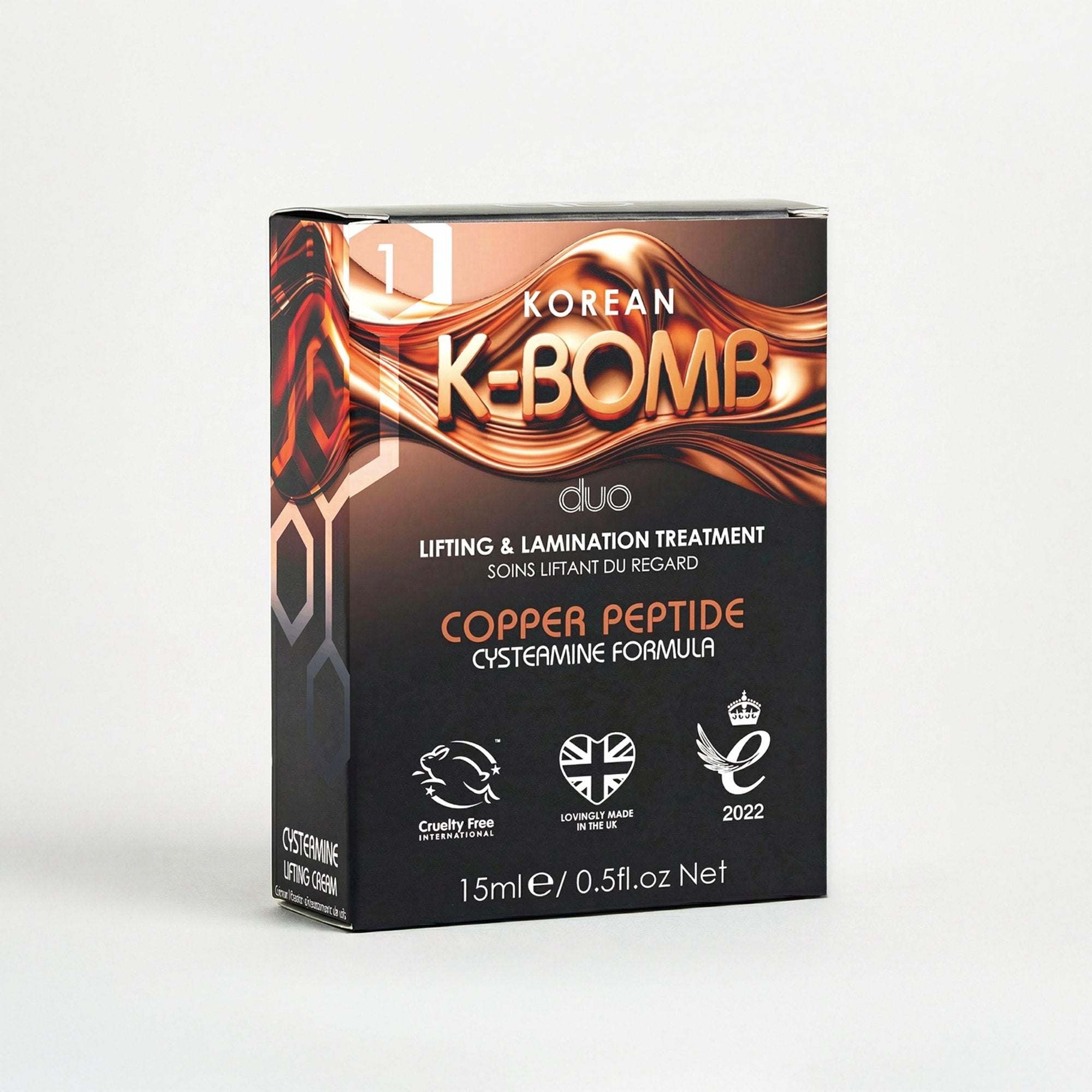
K-Bomb Cysteamine Lifting Cream
A TGA-free first step, gentle enough for the full lash and for sensitive clients, enriched with a copper-peptide complex that helps restore the lash fibre.
Shop Cysteamine CreamMethod and Longevity
The two creams are usually worked in slightly different ways. A TGA lift adheres the lashes to a single shield and treats them from the base up, avoiding the tips. A cysteamine lift is the basis of the Korean method, which relaxes the lash along its full length, often with a lifting powder mixed into the step to lift the lashes onto a flat shield. Both still need a neutralising stage and can take an optional colour boost. The shields used differ between the two, which is covered in our shields guide, and the slower cysteamine timings in our processing and timing guide.
| TGA (Traditional) | Cysteamine (Korean) | |
|---|---|---|
| Active | Thioglycolate | Cysteamine hydrochloride |
| Formula | Stronger, more alkaline, stronger scent | Gentle, milder scent, thicker consistency |
| Technique | Single shield, not on the tips | Full lash length, often a flat shield with powder |
| Best for | Coarse or resistant lashes | Sensitive clients; consistent, conditioned lift |
| Longevity | 6–8 weeks | 8–10 weeks |
Which Should You Use?
Neither cream is simply better — they suit different lashes and clients. Reach for TGA when the lashes are coarse or resistant and need a strong, fast lift, and you are confident reading a quick process. Reach for cysteamine when the client has sensitive eyes, when lash condition is a priority, or when you want more control and a lift that can run the full length of the lash. Many technicians keep both and choose per client.
A Simple Way to Decide
Coarse, stubborn lashes and a confident hand point to TGA. Sensitive clients, finer lashes, or a preference for control and conditioning point to cysteamine. For sensitive eyes specifically, see our guide to a lash lift on sensitive eyes. Whichever is used, a consultation and patch test beforehand are standard practice.